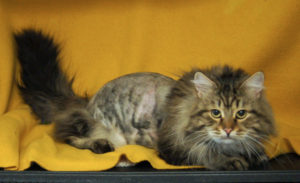
 FIV stands for Feline Immunodeficiency Virus. This is a disease that’s almost always found in outside cats who aren’t neutered or spayed.
Picture this. You’re a cute little boy kitten, rambunctious and playful. For whatever reason, you play too hard, you don’t “get along” with the other cats or dogs, you go outside the box because someone chases you away, so you end up outside, fending for yourself.
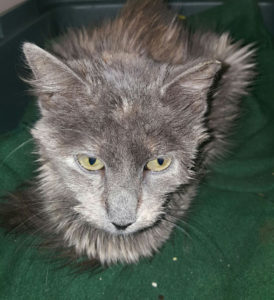 Your hormones kick in. Intact male cats are hardwired to procreate, just like intact females. It’s not exactly a love story, as there isn’t a lot of consent involved with everyone compelled to mate over and over until the females get pregnant. An intact male will be forced by his hormones to travel up to 3 square miles if he scents an intact female; he has no choice. Neither does he always choose the fights that arise from having many intact males vying for females, or the abuse they both can receive from humans who don’t like their behavior.
Keep in mind that most of this is perfectly preventable with neutering or spaying, as most fixed cats don’t act like this once those hormones go away.
FIV is transmitted through mating and deep wounds, both of which are likely to happen with this less-than-pretty process, both to males and to females. While occasional fighting may occur with neutered cats, it’s nothing like that of intact cats who are competing for resources, whether food or mating partners.
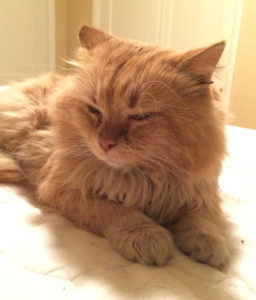 So here you are, a young male cat, showing up in line for an intact lady cat. You’re very likely to get beat up in the process, even if you are a scrapper, like little Rambo here. If you’re not, you’re even more likely to get FIV from losing those battles.
That’s the bad news. The good news is that recent research tells us cats who are positive for this virus have just as good a chance of living the same number of years as non-FIV cats, especially with good veterinary care. If the cat is one of the sweet ones who got beat up getting the disease, as most of them are, it’s also been proven that they can live happily with other cats and not transmit the disease, unless there’s serious fighting in the home.
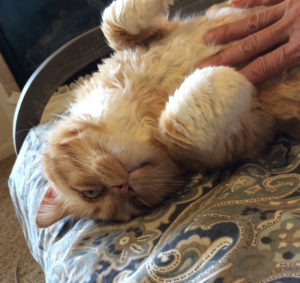 Because of this, we are taking in a limited number of FIV+ cats as long as we have room in foster care for them. We will test them twice to make sure they have FIV, as well as provide a blood panel for their baseline health.
As best we can, we will also test for temperament to see if they are cats we can recommend as getting along with other cats.
Most vets will recommend twice yearly checkups to make sure they are in good health, with special attention paid to dental issues and quickly treating any infections, as their immune systems don’t work quite as well as their non-FIV friends. They also recommend annual testing of any cats housed with an FIV+ cat to be sure about their status too.
Rambo, Columbo, Sasha and Stormy are already adopted, but we think you’ll find that our other FIV+ cats are some of the most lovable and sweet cats in the world!
]]>
Coming to a shelter is probably one of the scariest things that can happen to a cat, even at Happy Cats! They have been stripped of everything they know and love and find themselves with very little that is familiar, (except for the bedding, toys and food that we ask they be brought with).
 Imagine bringing your own sweet and loving cat to a conventional shelter, alongside any completely unsocialized, feral community cat. Research proves that, in the first several days, even the best cat expert won’t be able to tell them apart. Both will probably be either cowering or frozen in fear, overwhelmed by the new sights, sounds and smells of their new situation that contrasts so starkly with what they knew as home. There’s a big risk in conventional shelters for turning adoptable cats into unadoptable ones.
Since we opened in 2011, Happy Cats Haven has been committed to reducing the fear in our shelter cats to get them–and keep them!–more adoptable. It’s all about making the cats feel safe.
 Even before they come in, we teach people how to transport their cats and even give away a carrier cover with every adoption to make them feel safer. We teach our staff and volunteers to be respectful of cats’ needs when handling them, which can be very feline specific. When they are less afraid, their stress goes down. When their stress is down, they stay healthier. It also increases their confidence, and when that happens, we have happy, healthy cats for adoption!

Happy Cats Haven is now officially Fear Free Certified. This is a program that was recently started to make sure that the emotional well-being of pets is taken care of, along with their health. Three members of the Happy Cats team are certified in Fear Free Handling and we teach it to all of our staff and volunteers. This is an expansion of what we’ve taught all along, honing our skills and helping us to better care for our cats.
Fear Free Pets now offers support for all pet owners on their Fear Free Happy Homes site. Like our own website, they have lots of great resources and videos for simple ways to keep your own cat happy, both emotionally and physically.
We’re very proud to be a part of this great program, which we hope will help cat guardians everywhere to keep cats in their homes! Enjoy this great video on Cat Body Language, which we use to teach our own volunteers about how to better communicate with all cats.
]]> Research at Ohio State University last year proved that it doesn’t take much to get a cat off his or her regular routine. In fact, all it took was a change in caretakers for many of their cats to become ill.
As Tony Buffington, the lead researcher, says, “Cats are not a pack species. They are not used to living in large groups. Their two primary predators are larger carnivores and primates and so who do they live with? Dogs and people. It can be tough being a cat.”
Cats who come into shelters also face a barrage of stressful changes besides being forced to make nice with other cats: they’ve lost their people, their familiar space, most of the objects that make up their world and often, the food they’re used to.
We try to make their transitions as easy as possible, but often their bodies respond with loose stools or diarrhea. It’s a common problem in cats at home too.
These are a couple of natural remedies that we have used with success, both at Happy Cats and with our own cats.
Slippery Elm Syrup
Slippery elm is a bark that contains mucilage and tannins that coat the digestive tract. Its use for pets (and people!) is well documented. It’s great for small upsets, like helping a cat pass a hairball (many cats will have diarrhea around the time the hairball is coming up). If your cat is just starting to have intestinal upsets, try this.
Bring 1 cup water to a hard boil. Whisk in 2 teaspoons slippery elm powder (find it at your local health food store…bulk is easiest to work with). It should thicken up, like syrup. Run it through a blender if it lumps up too much.
You can add this to a cat’s wet food up to 3 times a day, using up to a teaspoon each time. Most cats will tolerate it in their food. Start with 1/4 teaspoon at first, building up to 1 teaspoon. Please remember that adding different flavors of canned food suddenly can also precipitate diarrhea, so stick with what the cat knows.
Gut Goop
Intestinal illnesses are notoriously difficult to diagnose because the parasites can be alive in different stages in the colon. We often use this mixture to build intestinal health in cats and kittens who have severe or chronic diarrhea, especially after they’ve been treated medically. This mixture soothes and rebuilds the gut, where some say up to 90% of the immune function resides.
The best way to use this to help with diarrhea is to combine it with an elimination diet. Remove from the cat’s diet all but the main food you know your cat tolerates well (no treats please!). Add this in once a day. This isn’t an overnight fix, but can slowly rebuild the intestinal tract back to health. If your cat has diarrhea, look for a gradual shift to some formed stools within 3-5 days and more formed stools within a week. Some cats take longer, but please see your veterinarian if the diarrhea persists.
WARNING: If using this for kittens, monitor very carefully. Each kitten is different, so some may need less than others…or none. Too much can throw a well kitten into constipation, which can be deadly, so make sure the kitten has diarrhea before using this.
1 can plain pumpkin puree
2 cups slippery elm syrup
1 cup Ener-G rice bran, powdered in blender or grinder
1/8 t. taurine, powdered
Five 100mg capsules PABA, powdered in mortar/pestle if necessary
Bifidyn Bifidus
Put rice bran in blender or grinder and blend till finely powdered. Add pumpkin and SE syrup and blend well. Add taurine and finely powdered PABA until mixed. Add to a teaspoon or so plain cooked, chopped chicken or canned food. Portion out and add a pinch of Bifidyn Bifidus powder (not the capsules…you want to avoid anything with magnesium stearate in it) per cat at serving time.
Use up to 1 teaspoon per adult cat per day, 1/4 – 1/2 teaspoon for kittens. Most cats aren’t familiar with the taste of pumpkin, so start slowly, adding 1/8 teaspoon at a time. If your cat can tolerate it, you can add up to 2 cups bran in this recipe. It makes a lot but freezes well in smaller containers.
We’ve had success with many cats and kittens on this formula and most seem to tolerate it; many even like it! Once your cat stops having diarrhea, you can save the recipe for only when it’s needed.
Of course, if the diarrhea persists, please see your veterinarian for further assistance. These are first aid recommendations only!
Thanks to Dr. Jean Hofve and her book, The Complete Guide to Holistic Cat Care: An Illustrated Handbook for her invaluable information on feline intestinal health.
]]> Happy Cats recently recieved this phone question:
My son has had his cat Rusty since he was a toddler. Suddenly, my son has developed severe allergies to his cat. Rusty is an important part of our family. Is there anything we can do to help our son and keep Rusty too?
Many of the volunteers at Happy Cats Haven have seasonal allergies, including allergies to cats. Along with the usual advice about brushing your cat, making sure to vacuum and dust a lot, avoiding your eyes or nose and possibly keeping your cat out of the bedroom, we have developed 9 other strategies for coping with allergies, even cat ones.
• Allergies are cumulative. Research has shown that many who suffer from allergies, including allergies to cats, are also allergic to other things like pollen and some foods. If you can monitor what’s triggering your allergy and find a way to avoid the other allergens, you may be able to lower your response to your cat.
• Reduce your intake of food allergens. Food sensitivities are common to people with allergies. Dr. Mark Hyman says that usual ones include dairy, wheat, corn, eggs, soy and citrus. A simple elimination diet can help identify which foods are the culprits. Many of us alter our diets a little during high-pollen seasons so our bodies don’t have to work so hard at processing all the allergens at once. Once spring turns to summer or fall to winter and the pollen goes away, you may be able to reintroduce these foods.
• Limit environmental toxins. Dr. Andrew Weil says that exposure to toxins in the environment can trigger sensitivities to food, which can in turn increase an allergic response to your cat. According to the Environmental Working Group, common products with hidden toxins (like formaldehyde, chloroform and acetaldehyde) are scented candles, air fresheners, cleaning products, laundry products and older furniture with PBDE flame retardants.
• Check your cat’s litter. Many litters have the same added toxins as above and can cause highly allergic reactions, in both humans and animals. Combine these toxins with clay dust and you have a recipe for allergies that is not your cat’s fault! Some find that non-clay litters produce fewer allergic reactions. Just be sure to transition your cat slowly from one litter to the next to avoid litter box issues.
• Try an air purifier. These can be purchased for under $50, even HEPA ones. The small ones are most effective in single rooms, like a bedroom. Simply running a filter while you sleep during spring or fall when the pollen count is up can lessen your allergic response to everything else, including your cat.
• Consider nutritional supplements. Over-the-counter antihistamines may treat the symptom but don’t do anything to help alter the allergic response itself and can have unwanted side effects. Many common supplements have been shown to help calm allergy symptoms. Dr. Joseph Mercola recommends adding omega-3 fatty acids, Vitamin D, probiotics and quercitin, among others. There are several qualified nutritionists and naturopaths in the Pikes Peak region who can help you identify which supplements might be most useful.
• Reduce your stress levels. Dr. Weil says that he’s seen people overcome severe allergies when they took steps to lower major stress in their lives.
• Stay hydrated. Making sure you drink enough water is very important in arid Colorado and will help your body to rid itself of the histamines produced by the allergic response.
• Ask your vet. Some veterinarians have had success prescribing Acepromazine in very small doses to cats to help their people with their allergies. The theory is that this drug alters the chemical makeup of the cats’ saliva to be more tolerable. Acepromazine is a sedative and not something to be taken lightly, but if you and your cat are in a desperate situation, it might be worth checking into.
Many of us in the Happy Cats family have used these techniques to control our allergies, keeping ourselves and our cat friends healthy and happy. As Abraham Lincoln most famously said (perhaps not of seasonal allergies!), “This too shall pass!”
]]> It’s that time of the year again: sunny days bring blooming flowers, pollinating trees…and people surrendering their cats.
We get calls from people who have been told by their doctors the only way to breathe more easily is to get rid of their cats. Is this really your only option?
At Happy Cats Haven, we don’t think so. Many of us have allergies–to cats as well as other things–and have found ways to live with them as well as our cat families.
Here are 7 tips about cats & allergies your doctor may not tell you about:
- Non-cat allergens may also be living in your home. Many products marketed to “freshen” the air actually create a chemical stew that can make your allergies worse. These include not only “air fresheners” such as plug-ins but scented candles and so-called “odor eliminators” that add unregulated perfumes. Manufacturers aren’t require to list fragrance ingredients, which can contain volatile organic compounds (VOCs) that can be carcinogenic at worst…and allergenic at best. Even natural incense can produce allergies.
- Litter may be the culprit. Many of us have noticed a huge difference in our allergies by switching from clay litters to other natural materials like wheat, corn or nut hulls. They are often less dusty, which means less dust on your cat, so less dust on you. And those scented litters? They put unregulated VOCs right where they can do the most damage, both to you and your cat. How unfair is it to blame your cat for allergies when you’re the one in charge of his or her litter?
- Check your cleaning products. One study found 457 air contaminants in 24 common household cleaners. Again, the companies don’t have to reveal what they’re using and many of these chemicals are allergenic and downright dangerous. This of course includes pet bathing ingredients, which are even less regulated. If your allergies get worse during or after cleaning, you may want to look into more natural solutions.
- Allergies are cumulative. If you have seasonal allergies to pollen, they will probably be worse in the spring and fall. This allergy load may make you allergic to cats and other animals at that time. Take steps to lower the load and you may find that the allergy passes, or becomes easier to live with. We wonder how many people give up their feline friends only to find those allergies come right back during the next pollinating season?
- Dust in the wind. If the wind is on a Spring rampage, kicking up dust as it does in the Pikes Peak region, your allergies may also kick in. Make sure your house is clean, including where your cats hang out, so they don’t become dust magnets and make your allergies worse. An inexpensive air filter can work magic during the allergy season and may not be something you even need during the rest of the year.
- Find another place for your cat to sleep. One of our favorite things is falling asleep to the sound of a happy cat purr. However, if you truly are allergic to your cat, keeping him away from the bedroom where you get the closest, most intense exposure can be a very logical solution. If your kitty is used to sleeping with you, it may take some time to make another space as valuable to him as the bedroom, but compared to rehoming or euthanasia, this is a much more kind and less drastic solution.
- Brush your cat. This almost goes without saying, but sometimes our cat friends can use some help, especially our longhairs. If done correctly, brushing can be an extension of petting time, rather than something your cat dreads. This will limit the fur load in your house and thus, the allergens. It will also help limit fearful trips to the groomer. We have tips for making grooming a pleasant experience, including using clicker training to help.
These can be life-or-death solutions for our animal friends (some point fingers at cats, but many people are also allergic to dogs). We have more suggestions, including diet and supplement help, in our other article, Don’t Let Allergies Steal Your Cat. See the link below for easy, natural cleaning products. Please call if we can help!
Potera, C. (2011) Indoor air quality: scented products emit a bouquet of VOCs. Retrieved from: http://www.ncbi.nlm.nih.gov/pmc/articles/PMC3018511/
Consumer Reports Magazine (2012) Is poor indoor air quality making you sick? Retrieved from: http://www.consumerreports.org/cro/magazine/2012/06/is-poor-indoor-air-quality-making-you-sick/index.htm
Healthy Child, Healthy World (2011) Air fresheners’ real impact on indoor air quality. Retrieved from: http://blogs.webmd.com/health-ehome/2011/04/air-fresheners-real-impact-on-indoor-air-quality.html
Bold, Cambria (2014) 20 DIY green cleaning recipes. Retrieved from: http://www.apartmenttherapy.com/20-diy-green-cleaning-recipes-141129
Lundgren, L. and Wald., J. (2014) How to allergy-proof your home. Retrieved from: http://health.howstuffworks.com/diseases-conditions/allergies/indoor-allergies/how-to-allergy-proof-your-home2.htm
]]>
If you have lived with cats you have probably asked “Why does my cat ______?”
Cats are still a mystery in many ways and we are often puzzled by their activities.
Come and learn about the natural cat and get answers to some of the most frequently asked questions about cat behavior.
• Why do cats bring home their prey?
• Can I train a cat to follow house rules?
• Will my cat accept a new baby or kitten in the house?
• What should I feed my finicky cat?
• Is the spray bottle the answer to behavior problems?
• How can I help my cat’s fear of the vet?
• Why doesn’t my cat act more like my dog?
This class will cover frequently asked questions, offer shelter kitty demonstrations, and provide time for your questions.
Sunday, Sept 20, 2015, 1:00- 3:00 PM at Happy Cats Haven
1412 S 21st St, Colorado Springs, CO 80904
Reservations: Melissa 719-686-8778 or Happy Cats Haven 719-635-5000
Facilitators: Melissa Shandley & Sara Ferguson. Melissa is one of the founding members of Happy Cats Haven and a Professional Cat Consultant. Sara is the Director of Happy Cats.
 Cats are getting fatter. About 1 in 5 cats were obese 25 years ago. Now that number is almost 1 in 3. While they’ve gotten safer in the last 20 years, the typical indoor cat is bored, overweight and at risk for disease and early death.
Most dog owners know they need to walk their dogs daily. We cat guardians also need to build in daily play sessions to keep our cats healthy.
Play therapy can give cats the best of both worlds, a safe cat that is healthy mentally and physically. It’s also a fun way to strengthen the bond with your cats.
Plus play relieves boredom, improves circulation, prevents disease, builds muscle tone and can prevent or reduce behaviors that are undesirable.
Your cat’s natural instinct to hunt for prey can be turned into playtime. A good play therapy session should include:
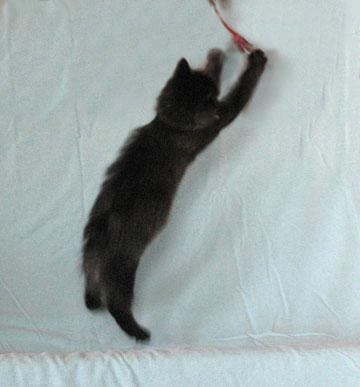
• A cue to initiate the session
• 7-10 minutes of active play
• Limited distractions from other humans or animals
• Using a toy, not your hands or feet
• Using the toy to simulate the movements of prey
• Safe surfaces for the cat to jump, run and land
• Letting the cat catch the toy near the end of the session
• Feeding a healthy protein treat to complete the hunting sequence and end the session
• Hiding the toy when you’re finished and rotating hidden toys
 Your cat will probably get bored quickly with any toy that just sits there. Who wouldn’t? Your best investment is a toy that has you on the other end of it, making playtime a partnership full of surprises. The more you play with your cat, the more your cat will want to play.
You can make your own cat toys from common materials or buy commercial ones that appeal to your cat. Experiment with different motions that imitate the movements that attract cats in nature.
You might have a cat who likes bird motions with fluttering, swooping air dynamics or you might find that scurrying a toy across the floor and hiding under furniture excites the cat’s hunting/playing instincts. Some cats like lots of rapid motion; others will be intimidated by so much activity.
Test your cat’s reaction to the following and find a few that will get your feline raring to play. We recommend and use the following toys for all our cats.
 WAND TOYS: Cat Catcher, Cat Dancer, Da Bird, fishing pole designs, peacock feathers, string-on-a-stick
The idea is to find or make something that allows you to excite your cat’s hunting instincts when you wave, flutter, twitch, or circle the toy. You can get big movements and keep your hands away from the hunting cat.
If your cat isn’t going after a string toy, try snipping off the toy on the end, leaving the string. Almost all cats love a string.
Remember to put the wand away out of sight after playtime. This will keep the cat excited about the play sessions. It also keeps you a critical part of the sessions and builds your relationship. Check toys for loose parts that might be harmful if swallowed and replace as needed.
BALL TOYS: wadded-up paper, Mylar crinkle, ping-pongs, sponges, felted balls, large pom-poms
The movement of a ball along the floor mimics the scampering of small prey animals. Many cats like to bat, kick, bite, drop, and carry these toys. You can increase the attraction with balls that have bells, treats or catnip inside to stimulate the play. Some cats will learn to bounce the balls into a basket, play soccer in the tub or play fetch with you and the ball. These toys should also be rotated to keep them interesting.

TIPS
Watch the signals
Play at your cat’s pace and watch the body language so you don’t overexcite the cat. If a cat gets too worked up, he or she could redirect their energy towards your hands or feet or another cat. Encourage play but be ready to take a break if things get too wild.
Don’t use your hands
If you use your hands to play with your cat you are teaching them to treat you as prey, so scratches and bites are likely to occur. You may think you can control the level of excitement but it is unfair to ask your cat to know the difference between play and affection.
You could be putting yourself, your cat and other humans at risk by teaching them to “attack” hands. Many cats end up in shelters because they were encouraged as kittens to bite hands or feet.
Pick a good time
Try to schedule playtime with your cat both in the morning and evening to find out when your cat is most receptive. If your play sessions are before mealtimes you mimic the natural prey sequence. Cats like routine so a play session each evening before meals will satisfy your cat’s natural drive to hunt and eat.
Careful with laser lights
Avoid using laser lights alone for play sessions, since many cats become frustrated or obsessed with chasing a light that they can’t ever catch. If you use a laser then transition to a toy or food that the cat can catch and bite to complete the natural prey drive.
One cat at a time
If you have more than one cat, try to play with them separately. If two excited cats are chasing a toy they could accidentally crash into each other and get hurt or frightened by the other cat. You might have to take the game into a room with one cat and close the door or keep two cats entertained with two separate toys (good exercise for humans too!).
No small or loose parts
Do check all toys for loose parts that might be harmful if swallowed and replace as needed. Swallowing string or other small parts can be very damaging or even fatal to cats.
 Cats instinctively take their prey away from other cats to eat. When we expect multiple cats to eat side-by-side, we may be setting them up for conflict.
Watch your cats’ body language. If they aren’t completely relaxed while eating, focusing on their food instead of other cats, or if they stop and dart away in the middle of eating, you may need to give them more space.
Watch also for food bullying, even if accidental. Some highly food-motivated cats may naturally push shy ones out of the way. Some cats, especially those lower in the cat hierarchy, may need to be fed in a different part of the room. Some may even need to be fed in a different room entirely.
If you free feed, please offer more than one feeding station. Much like litter boxes, there may need to be a separate feeding station per cat. Again, this is just insurance for preventing possible conflicts over food.
Don’t forget the water! Multiple water bowls ensure regular access to water as well as backup sources should one get tipped over. Cats need to be encouraged to drink, so offering more choices will make sure your cat gets the water he or she needs. Many cats also like water fountains. There are many commercial ones available.
Please see the articles below for more background information:
What should I feed my cat?
Ingredients: what to feed and what to avoid
You are what you eat. So are your cats.

Our experience is that much illness can be prevented and/or healed with proper feline nutrition. This is not a substitute for proper medical care but a partner in your cat’s health.
Cats are obligate carnivores. This means they must have meat to survive, unlike the omnivorous dog, who can survive on a wider variety of food.
Another difference is that cats have a relatively short digestive tract with a smaller stomach, compared to dogs (and humans). Cats’ livers are also lighter and much more simple than dogs, having evolved for lots of travel while hunting. Because they lack essential enzymes and amino acids, they simply don’t have the capacity to digest other food sources, like vegetable matter or fruit.
Your cat’s health depends on eating feline-appropriate ingredients in its food. The ideal diet for a cat is a mouse, which has around 55% protein and 23% fat. While there are sources for whole frozen mice to feed your cat, most people aren’t up to that task and rely on commercial or homemade cat food. It’s also just as important that your cat not be exposed to cat-inappropriate ingredients that may be toxic for it in the long run.
There is no consensus, either in the veterinary world or the pet consumer world, on whether to feed wet food, dry food, or homemade food. This is a choice best left to you and your lifestyle as your cat’s guardian.
As the 2007 pet food recalls showed us, even the most premium pet food brands have been known to put questionable ingredients in their food. It’s up to us to become well-informed consumers and choose the best food to keep our cats and kittens healthy.
We’ve drawn on the best research we can find for this article. We offer some parameters for what to look for in your cat’s food and what to avoid. Please see our article What Should I Feed My Cat for more specific recommendations. Feel free to contact us if you have any other information regarding any of these ingredients. We’re always open for new information!
PROTEIN
According to the AAFCO, adult cats can survive on 26% protein, while kittens and lactating queens need 30%. However, a mouse is around 55% protein, so a higher protein content will enable them to thrive, not just survive.
While the AAFCO definition of “by-product” can contain good ingredients such clean internal organs, pet food manufacturers are also allowed to include everything from sick slaughterhouse animals to euthanized animals to expired junk food. Since there is no consistency to the mix, it’s best to avoid this source.
Look for whole sources of protein, like whole chicken, turkey, eggs or fish. The best sources are from animals the cat could conceivably kill, with amino acid ratios appropriate to feline kidneys. This means chickens, turkeys and other small birds with occasional eggs and fish. “Meal” means the fat and water of the protein have been removed and is usually a satisfactory source of protein, since it’s more concentrated, but make sure the animal is specified.
What to avoid
- Any non-specific meat: especially by-products which can contain any form of animal matter (i.e., skin, fur, organs, etc.) and residual matter from processing which are unhealthy choices.
- Meat by-products: especially as the initial meat ingredient, avoid to ensure good long term health.
FAT
While the AAFCO puts minimum fat needs at 9%, a mouse would be around 23%. 15% fat is a good compromise. The fat source should be from a specific animal.
What to avoid
- Beef tallow: a cheap and undigestible fat source for cats
- “Animal fat”: the fat from rendering questionable sources of protein, which can include euthanized animals and the drugs used to kill them with, among other toxins.
- Vegetable fats like flax and safflower oil: cats can’t convert this to the appropriate fatty acid.
GRAINS/CARBOHYDRATES
A cat’s natural prey like the mouse would be around 3% carbohydrates. Cats actually have little metabolic need for carbohydrates and no way to convert carbs to energy, the way dogs and humans can. Grains are added to dry kibble to make it easier to handle for humans. The most appropriate grain for cats, according to research, is rice, and the most appropriate form for rice is rice bran. It should come after the protein sources in the list of ingredients.
What to avoid
- Wheat and soy: known allergens for cats
- Wheat fiber: a known irritant for cats.
- Corn: proven to have more bioavailable protein than other grains, but still less appropriate than meat sources.
NOTE: Corn and soy also have a very good chance of being contaminated with genetic modification (GM). Some estimate up to 80% of non-organic corn crops have been genetically modified. None of these GM crops have even been studied in the long run for their affect on humans, much less on cats. Unless you want yourself and your pets to be unpaid research subjects for corporate agriculture, you might want to avoid these products. - Potatoes and sweet potatoes: there is presently no published research on the effects on cats of newer carbohydrate additives such as potatoes or sweet potatoes. Until the manufacturers can show proof these ingredients are safe, it’s probably best to avoid them.
- Gluten: many formulas have gluten as a source of carbohydrates as well as protein. Gluten was proven to be a risky ingredient imported from China in the form of melamine during the 2007 pet food recalls that killed millions of companion animals.
FIBER
Up to 90% of the immune system response lies in the intestine. Fiber plays a huge role in making sure the intestine is healthy. Rice bran and beet fiber have proven to be good sources of fiber for felines in that they provide the fermentability for good bacteria as well as not lowering the digestibility of the rest of the food.
What to avoid
- Cellulose: the least fermentable fiber for felines. This may push the food through too quickly for proper nutrients to be absorbed.
- Oat fiber, peanut hulls, psyllium gum, soy hulls, citrus pulp and lactulose are also not fermentable by cats, according to research, acting like cellulose in the gut.
- Fructooligosaccharides (FOS), guar gum, locust bean gum and citrus pectin are actually too high in fermentability and can cause gas, diarrhea and loss of nutrients.
- Peas & pea fiber: another inexpensive filler and highly insoluble. Note there is zero research available on its effect on cats.
VITAMINS & MINERALS
Cats need most of the same vitamins and minerals that dogs do, with the following exceptions. Cats need more Vitamin A than dogs because they can’t convert beta carotene. They also need twice the amount of B Vitamins: (Thiamine, Riboflavin, Pyridoxine, Pantothenic Acid, Niacin and B-12). Most commercially prepared diets contain the recommended amounts of vitamins and minerals for cats and it can be dangerous to supplement past minimum requirements.
What to avoid
- Vitamin K3, otherwise known as Menadione or Menadione Sodium Bisulfite or Bisulphate: a cheap and artificial form of Vitamin K that causes many serious side effects. This is banned for human use here in the US as well as in Europe.
VEGETABLES & FRUITS
A vet once said that if cranberries were good enough for him, they were good enough for his cat. Based on that reasoning, he should be thriving on a primarily protein diet of mice, small birds, eggs and fish. That’s not the case, of course.
The only well-researched sources of vegetable nutrition for cats are pumpkin, rice bran and beet fiber. Many cat foods, especially higher-end ones, are marketed toward the human, not the cat. This leads to unresearched additives like tomatoes, blueberries, cranberries, potatoes, carrots, spinach, apples, zucchini…the list goes on. In addition, avocados have been found to be toxic to cats.
Cats suffer with less research funding than dogs have, so many of these ingredients have not been proven to be safe. Cats’ simpler livers lack certain enzymes and amino acids to process these ingredients which are exotic to the normal diet of cats. Until the pet food manufacturers can prove the safety of these ingredients, it’s simply unnecessary–and downright dangerous–to feed your cat food that has these in it.
What to avoid
- Cranberries: a growth industry from overproduction of cranberries, with no research to guarantee either safety or health improvement, especiall in cats. In fact, the benzoic acid of cranberries has been proven toxic to cats.
- Blueberries, apples, acai berries, tomatoes or any other fruit: no research to support their safety.
- Carrots, spinach, turnip greens, zucchini, green beans or any other vegetable but pumpkin: no research to support their safety.
- Avocadoes: all parts are toxic to animals and research says, “Feeding avocados to any non-human animal should be completely avoided.”
HERBS & HERBAL ADDITIVES
Again, cats’ livers cannot process many of the same things dogs can, so you should never assume the safety of exotic ingredients unless your pet food manufacturer can show you the research. Many herbal additives, such as yucca, alfalfa, green tea and parsley are included as enticements for the cats’ humans, with no proof of their safety for the cats themselves.
What to avoid
- Yucca Schidigera Extract: purported to decrease the odor in feces, Yucca is on many lists of plants toxic to both dogs and cats.
- Rosemary Extract: cheap preservative known to cause seizures in cats and small dogs and not proven safe, either in the US or in Europe.
- Alfalfa, green tea, parsley, licorice root, angelica root, fenugreek, marigold, fennel, peppermint, chamomile, dandelion, savory, or any other herbs: no research to support their safety.
PRESERVATIVES
Mixed tocopherols (Vitamin E) have been proven to be safe and effective preservatives in cat and dog food. Recently, manufacturers have begun to add cheaper and more deadly preservatives to their formulas.
What to avoid
- Ethoxyquin: actually a pesticide which may compromise your cat’s health over time.
- BHA & BHT: cheap chemical additives not proven to be safe.
THICKENERS
This is an odd category, but must be included for canned cat food, since almost all brands have some in them.
What to avoid
- Carrageenan: a known cancer-causing substance for humans, it is also known to produce intestinal lesions, ulcerations and tumors in experimental animals. Can be avoided in some canned cat food.
- Guar Gum: shown to decrease the digestibility of protein in cat food. Very sticky substance that may cause canned food to stick more to cats’ teeth. Hard to avoid in canned food.
FOOD COLORING
Cats can only see minor variations in color, so any bright colors in food are put there for the humans, not for the food. No food coloring has proven to be safe for felines, so if your cat’s food isn’t meat colored, avoid it.
REFERENCES
ASPCA (2011) Toxic and non-toxic plants. Retrieved from http://www.aspca.org/pet-care/poison-control/plants/
Association of American Feed Control Officials, 2005-2010, Official publication.
Becker, K. (2011) What dangerous byproducts lurk in cat food? Retrieved from http://healthypets.mercola.com/sites/healthypets/archive/2009/07/21/proper-nutrition-for-your-cats.aspx
Berg, J. (June, 2012) Catnip: the newsletter for caring cat owners: Settling the dry-versus-wet-food debate, p. 7.
Board on Agriculture (1986) Nutrient Requirements of Cats, Revised Edition. Retrieved from: http://www.nap.edu/openbook.php?record_id=910&page=34
Carciofi, A. C. and Brunetto, M. A. Nutritional Management of the Most Common Digestive Diseases in Dogs and Cats Retrieved from http://tinyurl.com/catdigestivediseases
Contreras, S. (2007) Meniodone (vitamin K3). Retrieved from http://www.dogfoodproject.com/index.php?page=menadione
Creighton, P. (2007) Pet food pitfalls. Retrieved from http://petfoodpitfalls.blogspot.com/
Dierenfeld, E. S., Alcorn, H. L., Jacobsen, K. L. (2002) Nutrient composition of whole vertebrate prey (excluding fish) fed in zoos. Retrieved from http://tinyurl.com/preynutrition
Erickson, P. (2010) Feline constipation: gut bacteria and fiber. Retrieved from http://www.felineconstipation.org/gutbacteriaandfi.html
European Food Safety Authority (EFSA) (2012) EFSA Journal: Statement on the safety and efficacy of the product ‘Rosemary extract liquid of natural origin’ as a technological feed additive for dogs and cats. Retrieved from: http://www.efsa.europa.eu/de/efsajournal/pub/2526.htm
Fekete, S. G., Huller, I., Andresofszky, E., Kelemen, F. (2004) Journal of Animal Physiology and Animal Nutrition, Effect of different fibre types on the digestibility of nutrients in cats
Gavin, R. (2005) The Boston Globe: Growers’ pet project. Retrieved from:
http://www.boston.com/ae/food/articles/2005/04/21/growers_pet_project/
Harper, E. J., and C. Siever-Kelly. (1997) Recent Advances in Animal Nutrition in Australia, The effect of fibre on nutrient availability in cats of different ages.
Kovalkovicova, N., Sutiakova, I. Pistl, J. and Sutiak, V. (2009) Interdisciplinary Toxicology: Some food toxic for pets. Retrieved from http://www.ncbi.nlm.nih.gov/pmc/articles/PMC2984110/?tool=pubmed
Liquorman, N. (2012) Pet food neurotoxin: rosemary extract & seizures. Retrieved from: http://www.thedogpress.com/DogFood/Rosemary-Neurotoxin-10032_Liquorman.asp
Max’s House Animal Rescue (2011) Feline nutrition. Retrieved from http://maxshouse.com/feline_nutrition.htm
Siegal, Mordecai (1997) The Cornell book of cats: the comprehensive and authoritative medical reference for every cat and kitten, pp. 258-259.
Sunvold, G. D., Titgemeyer, E. C., Bourquin, L. D., Fahey, G. C., Reinhart, G. A., (1994) Journal of Nutrition: Fermentability of Selected Fibrous Substrates by Cat Fecal Microflora
Thixton, S. (2009) What ‘kind’ of protein is your pet eating? Retrieved from http://www.truthaboutpetfood.com/articles/what-%E2%80%98kind%E2%80%99-of-protein-is-your-pet-eating.html
Thixton, S. (2012) Carrageenan: just don’t do it. Retrieved from: http://www.truthaboutpetfood.com/articles/carrageenan-just-dont-do-it.html
Tobacman, J. (Oct. 2001) Environmental Health Perspectives: Review of harmful gastrointestinal effects of carrageenan in animal experiments. Retrieved from http://ehp03.niehs.nih.gov/article/fetchArticle.action?articleURI=info:doi/10.1289/ehp.01109983
Yarnall, C., & Hovfe, J. (2009) The complete guide to holistic cat care.
]]>
Please see the articles below for more background information:
What should I feed my cat?
Ingredients: what to feed and what to avoid
Tiki Cat canned cat food
Promoted as the “lowest carbohydrate food on the pet food market,” this is a very limited ingredient but balanced food.
ADVANTAGES: This is one of the best pure meat foods for getting your cat’s protein percentage where it should be. Most have no gravies or fillers. It is available at Pet Health Store and Mike’s Natural Pet in Colorado Springs, as well as Natural Grocers.
DISADVANTAGES: You must read the labels closely as some have “vegetable gums,” especially the line with rice in it. All foods have sunflower oil, either instead of or along with species appropriate fish oil. Because of having less fillers, this is an expensive line.
Petsmart’s Authority brand canned cat food
This is Petsmart’s house brand, readily available.
ADVANTAGES: All the pate flavors are made with whole meat. Although they all have guar gum in them, none have carrageenan. It is palatable to most cats and medium range in price.
DISADVANTAGES: All flavors have chicken in them and most have fish, so if you’re looking for a single-protein food, you might avoid this one.
Evangers canned cat food
There are several different lines; we recommend the Classic, Organic and Game Meat lines.
ADVANTAGES: Limited whole meat ingredients, wider choice of proteins and palatability. If using the Game Meat line, be aware this is only meat, no added vitamins and minerals, so cannot be used as your cat’s sole food source. It is available at Pet Health Store and Mike’s Natural Pet in Colorado Springs, as well as some Natural Grocers.
DISADVANTAGES: May be harder to find, is more expensive and all contain guar gum.
Nutro’s Natural Choice canned food
Kitten canned food:
ADVANTAGES: Appears to be whole chicken with pork broth, fairly simple formula. Readily available. DISADVANTAGES: Has guar gum.
Adult canned cat food, Minced Chicken Formula:
ADVANTAGES: Appears to be whole chicken with “egg product” and pork broth, fairly simple formula. Readily available.
DISADVANTAGES: Has guar gum. The turkey loaf formula has carrageenan, so read labels.
Hound & Gatos canned cat food
These are single protein source cat foods, if you need to limit your cat to one protein.
ADVANTAGES: Unique flavors such as rabbit and trout. Palatable, simple formulas. It is available at Mike’s Natural Pet in Colorado Springs.
DISADVANTAGES: All have 3 kinds of gum in them: xanthan, guar and cassia. They are also more expensive and harder to find.
California Natural canned cat food
The canned version from this Evo subsidiary.
ADVANTAGES: Appears to be from whole meat sources.
DISADVANTAGES: All versions have carrageenan and guar gum in them. May be only available online.
Ziwipeak Daily Cat canned cat food
This company says their food is closest to a “wild-prey, natural diet.”
ADVANTAGES: The food is a very simple formula and comes in rabbit with lamb. It is available at Pet Health Store. All formulas now are carrageenan free.
DISADVANTAGES: The larger animals may not be appropriate prey for a small animal like a cat. It can only be found at specialty food stores or online and is very expensive.
Organix Organic Grain-free Pate formulas
If you’re concerned about supporting sustainable agriculture, this is probably the only line available. ADVANTAGES: Whole chicken for the protein. Available at some health food stores.
DISADVANTAGES: All lines contain peas and pea fiber to replace the grains, as yet unresearched for cats. They also have flaxseed, carrots, alfalfa, cranberries and yucca, many unresearched or known toxins for cats. The shredded formulas also have carrageenan and cellulose.
Please see the articles below for more background information:
What should I feed my cat?
Ingredients: what to feed and what to avoid